
Blog
What Is Infiltrasjon? How Water Enters Soil and Helps Control Runoff

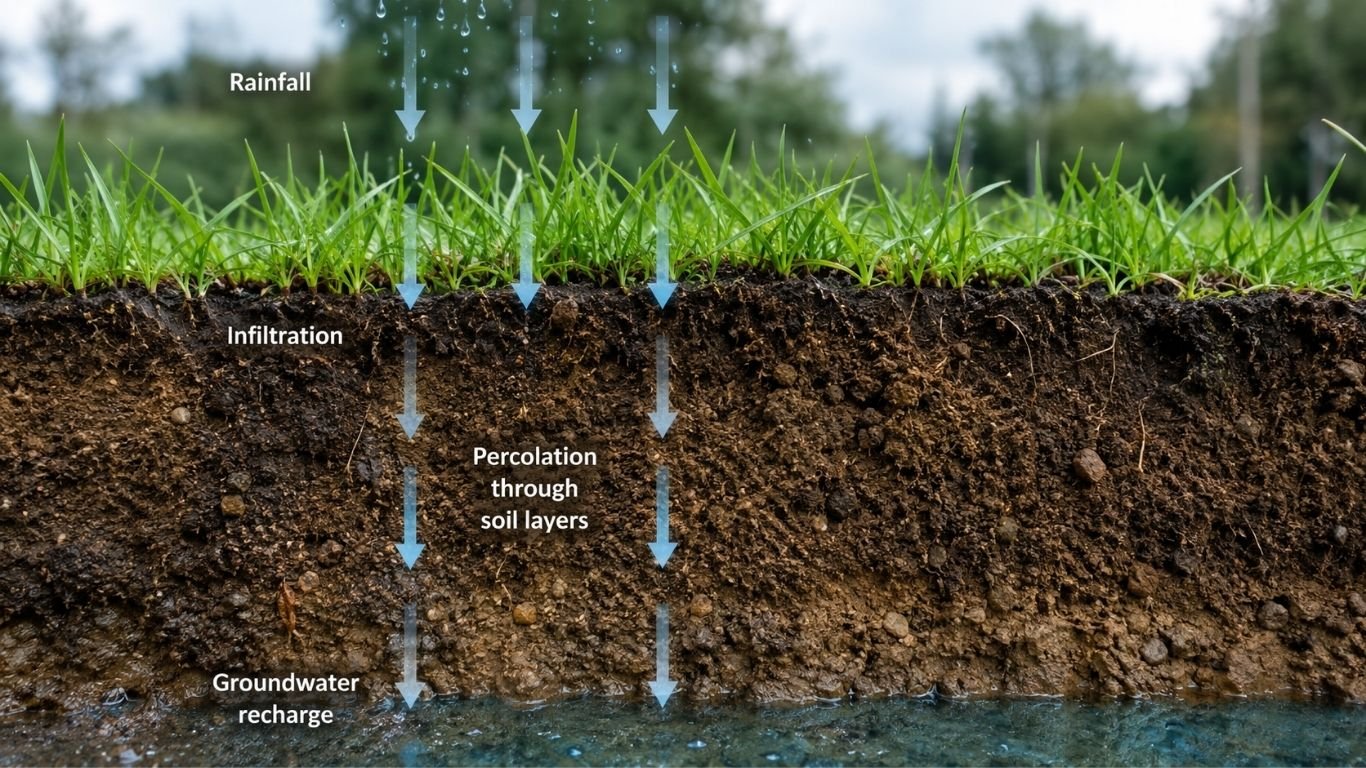
Water rarely follows one simple path after rain reaches the ground. Some of it runs across streets, roofs, fields, and parking areas. Some returns to the air. Another part enters the soil and begins a slower journey below the surface.
That entry process is called infiltrasjon, a Norwegian term used for infiltration in hydrology and stormwater planning. It affects runoff, soil moisture, plant growth, stream flow, and groundwater recharge. It also shapes how cities prepare for heavy rain.
What Is Infiltrasjon and Why Does It Matter?
Infiltrasjon is the movement of water from the land surface into soil or other porous ground. It usually begins when rain, melting snow, irrigation water, or stored stormwater reaches an area where the surface allows entry.
This process is a major part of the hydrologic cycle. Water that enters the ground may remain in shallow soil, support plant roots, move sideways toward a stream, or travel deeper toward an aquifer. The final path depends on local geology and soil conditions.
The process matters because it controls how much water remains on the surface. When soil accepts water, less runoff reaches streets and drainage pipes at once. This can reduce shallow flooding, erosion, and sudden pressure on urban drainage systems.
However, soil intake is not unlimited. During intense or long rain, the rainfall rate may become greater than the soil can accept. Water then begins to pond or flow across the surface as runoff.
How Does Water Move From the Surface Into Soil?
Water first crosses the soil surface. It then enters spaces between soil particles, cracks, root channels, worm paths, and other openings. Gravity pulls it downward, while capillary forces draw water into small dry pores.
At the start of a storm, dry soil may accept water quickly. Small pores create strong suction, especially near the wetting front. As the soil becomes wetter, this pull weakens and the intake rate often falls.
The downward movement does not remain uniform. Water may move faster through large cracks or old root channels than through the surrounding soil. This rapid route is called preferential flow and can carry water deeper than a simple soil layer model suggests.
Water that continues below the surface may move through the unsaturated zone. Some stays near roots, while some travels deeper through percolation. If it reaches the saturated zone, it may contribute to groundwater recharge, though not every infiltrated drop reaches an aquifer.
What Is the Difference Between Infiltration Capacity and Rate?
Infiltration capacity is the greatest rate at which soil can accept water under stated conditions. It is a limit set by the soil surface, soil profile, moisture level, pore system, and hydraulic properties.
The actual infiltration rate is the amount of water entering the ground at a given time. It can be lower than capacity when rainfall is light. For example, soil may be able to accept one inch per hour while rain falls much more slowly.
When rainfall intensity rises above the current capacity, excess water remains on the surface. It may collect in low areas or become overland flow. This condition is important in rainfall runoff models because it helps determine when runoff begins.
Capacity also changes during an event. Many soils accept water faster at the start, then approach a lower rate as they become wet. Surface sealing, sediment, freezing, and trapped air can further reduce intake during or between storms.
How Do Soil Texture and Structure Control Water Entry?
Soil texture describes the relative amount of sand, silt, and clay. Coarse soil often contains larger connected pores, so water can move through it more easily. Fine soil has smaller pores and may transmit water more slowly.
Texture alone does not tell the full story. A clay soil with stable cracks and strong structure may accept water faster than a poorly structured fine soil. A sandy surface may also overlie a dense layer that slows deep movement.
Soil structure describes how particles form aggregates and channels. Stable aggregates create connected spaces for air and water. Roots, fungi, organic matter, and soil organisms can help build this structure.
Disturbed soil often loses these benefits. Construction can mix natural layers, remove topsoil, smear excavation walls, or bury compacted material. A surface may look open while a dense layer below prevents drainage.
For this reason, design teams examine the entire soil profile. They do not rely only on surface appearance or a general soil map.
How Do Land Cover and Soil Condition Change Infiltrasjon?
Vegetation can improve infiltrasjon by protecting soil from direct raindrop impact. Leaves slow rainfall, litter covers the surface, and roots create pathways that help water enter and move through the soil.
Plants also support soil organisms and organic matter. These elements can improve aggregation and create a more open pore system. Deep rooted plants may be especially useful where suitable species and site conditions allow.
Initial moisture changes the early response. Dry soil often draws in water quickly because of capillary suction. Wet soil has less empty storage, so intake may fall toward the rate controlled by saturated conductivity.
Compaction has the opposite effect of healthy structure. Heavy vehicles, repeated foot traffic, livestock, and construction equipment press particles closer together. This reduces large pores and can form dense layers.
The result is often more ponding and runoff. Restoring a compacted site may require decompaction, soil replacement, organic amendments, vegetation, and time. One treatment does not suit every soil.
How Is Infiltrasjon Measured in the Field?
Field testing helps determine how fast water enters soil at a planned location and depth. Common methods use rings, test pits, boreholes, or controlled water application to observe falling water levels or intake over time.
A single ring infiltrometer is simple, but some water can move sideways. A double ring infiltrometer uses an outer ring to reduce lateral flow from the inner test area. Results still depend on setup, soil disturbance, and test duration.
Tests for stormwater systems often focus on the soil at the proposed base elevation. Testing only at the ground surface may miss a restrictive layer that will sit directly below a basin, trench, or pavement reservoir.
Several tests across a site are usually more useful than one. Soil can vary because of fill, old foundations, utility trenches, natural deposits, or past grading. Seasonal groundwater conditions can also change the safe depth available.
Designers apply local rules and suitable safety factors to measured values. They also consider how sediment and aging may reduce long term performance.
Hydraulic Properties and Groundwater Limits
Hydraulic conductivity describes how easily water moves through soil or rock under a hydraulic gradient. Saturated hydraulic conductivity, often written as Ksat, is especially important when pores are filled with water.
Porosity is the share of total soil or aggregate volume made up of voids. High porosity can provide storage, but it does not always mean fast flow. Tiny disconnected pores may hold water without transmitting it quickly.
The void ratio compares the volume of voids with the volume of solids. Engineers use this concept when describing soils and stone storage layers. Both porosity and void ratio help estimate available storage, but field conditions still matter.
The water table marks the upper part of the saturated zone. An infiltration system generally needs adequate separation above this level. Separation allows water to move through unsaturated soil and may improve pollutant removal.
A high water table can slow drainage, create prolonged ponding, or increase groundwater contamination risk. EPA guidance stresses careful siting and adequate separation for systems that direct stormwater toward groundwater.
Mathematical Models and Stormwater Software
The Horton model is an empirical method. It represents intake capacity as a rate that declines from a higher starting value toward a lower final value during a long wet period.
The model is useful when observed data can support its parameters. It does not directly describe every soil process. Instead, it gives a practical curve for rainfall runoff calculations.
The Green Ampt model is more physically based. It treats the wetting front as a boundary between wetter soil above and drier soil below. Important inputs include hydraulic conductivity, moisture deficit, and wetting front suction.
The Philip equation describes early time intake using soil sorptivity and later flow terms. Sorptivity represents the ability of dry or partly dry soil to draw in water through capillary action.
Darcy’s Law supports many subsurface flow calculations. It links flow to hydraulic conductivity, area, and hydraulic gradient. Green Ampt theory applies Darcy based concepts to a simplified moving wetting front.
Engineers use models to estimate rainfall losses, runoff volume, storage needs, and flow timing. The selected method must match the project scale, available data, soil conditions, and study purpose.
EPA SWMM can represent surface intake with Horton and Green Ampt methods. HEC HMS also provides loss methods for watershed studies and includes a Green Ampt option.
Model results are not measurements. They depend on rainfall data, soil parameters, assumptions, and calibration. Good practice compares output with field tests, observed runoff, or water levels when suitable data exist.
Infiltration Basins and Trenches
An infiltration basin is a broad depression designed to collect runoff and release it through the basin floor. It may be vegetated and can serve a larger drainage area than a small rain garden.
The basin needs enough storage for the selected storm event or water quality volume. Its base must rest above unsuitable groundwater or bedrock conditions. The inlet also needs erosion control and sediment management.
An infiltration trench is a narrow excavation filled with clean stone or another high void material. Runoff enters the stone storage space and then moves into the surrounding soil.
Trenches fit confined areas, but inspection can be difficult after installation. Sediment can clog the surface, inlet, filter layer, or stone voids. Pretreatment is often important where runoff carries grit.
Neither system has one universal drain time. Local manuals set design targets based on climate, soils, mosquitoes, safety, and available storage. Field testing must guide the final dimensions.
Permeable Pavement and Rain Gardens
Permeable pavement allows water to pass through the wearing surface into a stone reservoir. Common forms include porous asphalt, pervious concrete, and permeable interlocking concrete pavers.
The stone layer can store runoff before it enters the subsoil or leaves through an underdrain. The design depends on traffic load, frost conditions, subgrade strength, sediment exposure, and maintenance access.
A rain garden, also called a bioretention area, is a shallow planted feature that receives runoff from nearby roofs, sidewalks, driveways, or streets. Engineered soil filters water while plants support surface stability and water use.
Some bioretention systems infiltrate fully. Others use an underdrain because the native soil is slow or groundwater protection requires more control. The outlet and overflow must match the site.
EPA identifies rain gardens, bioretention, and permeable pavement as green infrastructure tools that can absorb, filter, and manage stormwater near where it falls.
SuDS and Green Infrastructure Frameworks
Sustainable Drainage Systems, commonly called SuDS, manage runoff through a connected group of natural and engineered controls. The approach considers water quantity, water quality, public value, and habitat.
The Construction Industry Research and Information Association, known as CIRIA, publishes The SuDS Manual C753. The manual covers planning, design, construction, operation, and maintenance for sustainable drainage practices.
In the United States, Low Impact Development, or LID, aims to preserve or restore natural site hydrology. It uses grading, vegetation, soil, permeable surfaces, storage, reuse, and other tools to reduce runoff.
The term green infrastructure overlaps with LID. EPA describes it as using filtration, infiltration, and evapotranspiration to treat and absorb rainfall near its source.
These frameworks do not require every site to infiltrate all runoff. A treatment train may combine storage, filtration, reuse, controlled discharge, and safe surface conveyance.
Norway’s Three Step Strategy for Infiltrasjon
Norwegian stormwater guidance uses a three step strategy often called tretrinnsstrategien. It organizes actions around rainfall size and the level of control needed.
The first step manages smaller, common rainfall near where it lands. Natural ground, planted areas, rain gardens, and other local measures can capture or soak up part of this water.
The second step delays larger runoff volumes. Open storage, detention areas, channels, and linked blue green spaces can reduce peak flow before water reaches pipes or receiving waters.
The third step provides safe routes for extreme rainfall that exceeds local storage and drainage capacity. Roads, parks, channels, and planned flood paths may carry excess water away from vulnerable buildings.
The Norwegian Environment Agency, or Miljødirektoratet, presents the strategy through infiltration, detention, and conveyance. It also notes that natural infiltration reduces runoff and can help maintain groundwater levels.
Safe Design and Long Term Care
A system that sends stormwater underground must protect soil, groundwater, buildings, and neighboring land. Polluted runoff may contain sediment, metals, oil, fuel, nutrients, road salt, or other contaminants.
Pretreatment can reduce this load before water reaches the main system. Forebays, filter strips, vegetated swales, sediment traps, and engineered media are common options, depending on the pollutant source.
Location is equally important. Designers check contaminated land, drinking water protection zones, unstable slopes, shallow groundwater, bedrock, basements, retaining walls, utilities, and property boundaries.
Maintenance protects long term performance. Leaves, sediment, trash, and road grit can seal surfaces and block inlets. Vegetation can fail, underdrains can clog, and overflow routes can become obstructed.
A management plan should name the responsible owner, inspection schedule, warning signs, and repair method. Without regular care, a system may lose storage and create standing water or unwanted overflow.
Bottom Line
Infiltrasjon is both a natural soil process and a practical stormwater tool. It helps explain why some rainfall enters the ground while the rest becomes surface runoff.
The process depends on rainfall, soil texture, structure, moisture, vegetation, compaction, hydraulic conductivity, groundwater depth, and subsurface layers. No single rate or equation can represent every site.
Engineered systems can restore part of the water cycle in developed areas. Basins, trenches, rain gardens, and permeable pavement can store, filter, and release rainfall when the ground and surrounding conditions are suitable.
Safe design requires field testing, pollution review, overflow planning, and maintenance. Modeling supports these tasks, but it does not replace site evidence or professional judgment.
A sound infiltrasjon plan uses several layers of control. It manages common rainfall near its source, delays larger events, and reserves safe routes for extreme water that exceeds local capacity.
FAQs
What Does Infiltrasjon Mean in English?
It means infiltration. In hydrology, the word describes water moving from the land surface into soil, sediment, or porous rock.
Is Infiltrasjon the Same as Percolation?
No. Infiltration is the entry of water through the ground surface. Percolation is the later movement of water through openings in soil or rock.
Which Soil Usually Has the Highest Infiltration Rate?
Coarse, well structured soil often transmits water faster than dense fine soil. However, buried layers, compaction, moisture, and cracks can change field performance.
Can Infiltration Systems Prevent Every Flood?
No. They can reduce or delay runoff when they have available capacity. Extreme rain still requires detention, drainage, and safe overflow routes.
Why Must Groundwater Depth Be Checked?
A shallow water table can slow drainage and reduce the unsaturated soil available for treatment. It can also increase the risk that pollutants reach groundwater.
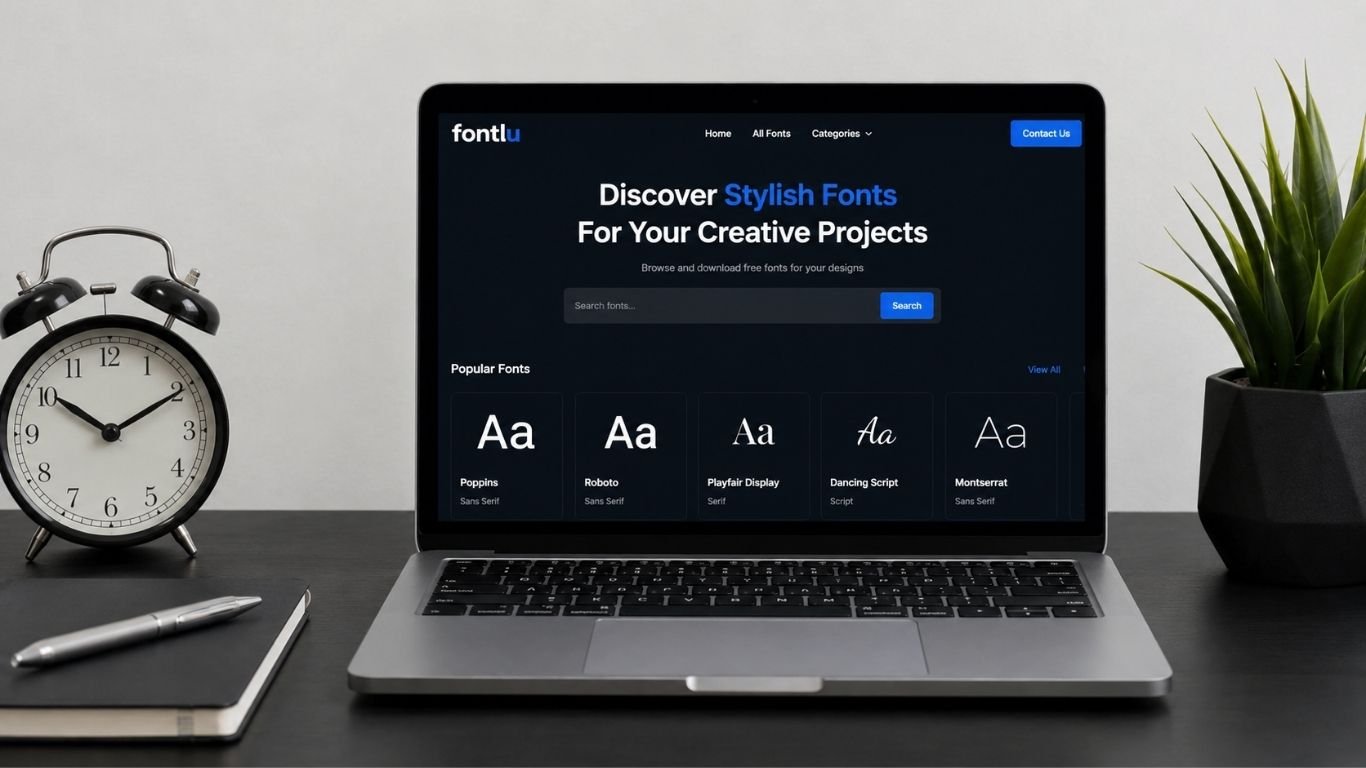
Fontlu is an online typography platform that helps users find stylish fonts for creative projects. It offers both free and premium typefaces for logos, websites, branding, social media posts, and print designs. The platform is useful for designers, developers, business owners, and content creators who want fresh font ideas in one place. With simple browsing and preview tools, Fontlu makes it easier to compare styles and choose a font that fits the look and purpose of a project.
What Is Fontlu?
Fontlu is a web-based platform focused on fonts and visual text. It helps users explore typefaces that can change the look and feel of a design.
A font is more than a set of letters. It gives a message its visual voice. A bold font can feel strong. A script font may look soft or personal. A clean sans-serif typeface can make a website feel modern.
Fontlu gives users a place to test such styles without opening complex design software. The site currently includes a font creator tool where visitors can type text, choose a font, change its size, preview the result, and copy the styled text. s makes the platform suitable for both new and skilled users. You do not need years of design experience to compare a few font styles and see which one fits your idea.
How Does Fontlu Work?
Using Fontlu is designed to be simple. The exact steps may change as the website adds or updates features, but the main process is easy to understand.
Enter Your Text
Start by typing a word, name, title, or sentence into the text box. You might enter a business name, a social media caption, or a heading for a website.
Using your real project text is better than testing a random sample. It shows how the typeface handles the letters that will appear in the final design.
Choose a Font Style
Next, select a font from the available choices. Different typefaces can create very different moods.
A serif font may give a formal or classic look. A sans-serif font often feels clean and modern. Script fonts can look elegant, while display fonts are made to attract attention.
Adjust the Font Size
Change the text size until the preview is easy to judge. Small text helps you test body copy. Large text is better for logos, banners, posters, and headings.
Fontlu’s tool includes a font-size control, which allows users to test how a style looks at different scales. Review the Preview
Look at the spacing, shape, and readability of the letters. A font may look great in one word but feel crowded in a full sentence.
Check special letters, numbers, and punctuation marks as well. This is important when the final project includes dates, prices, web addresses, or product codes.
Copy or Download the Result
The Fontlu creator tool offers an option to copy text after styling it. Font files listed on a font platform may also be available for download, depending on the resource and its license terms. ore downloading or using anything in a public project, read the usage rules shown with that font.
Main Features of Fontlu
Fontlu aims to make font use more direct. Its value comes from giving users a faster way to explore visual text.
Free and Premium Fonts
The platform describes its collection as including both free and premium typefaces. This gives users options for different needs and budgets. e fonts can be useful for school work, personal graphics, test designs, or early ideas. Premium fonts may offer more weights, extra characters, better spacing, and broader license rights.
However, “free” does not always mean free for every purpose. A typeface may be free for personal use but restricted in business work.
Easy Font Preview
A preview tool helps users judge a font before using it in a full design. This is useful because a font name or sample image does not always show how it will look with your own words.
Testing the real brand name or heading can prevent poor choices later.
Font Size Control
Size affects how a typeface looks. Thin lines may disappear when text is small. Heavy letters may feel crowded when used in a long paragraph.
Fontlu lets users adjust the preview size so they can study a font in more than one setting. Quick Text Copying
The copy feature is useful for people creating short text for digital projects. After testing a style, users can copy the result and move it into another tool where supported.
This can speed up small creative tasks. Still, copied decorative text is not always the same as installing a real font file. Some online text tools use special Unicode symbols instead of standard typefaces.
Browser-Based Access
Fontlu works through a website, so users can explore it from a browser. This removes the need to install a large design program just to test a few font styles.
The final use of a downloaded font may still require design, writing, or development software.
Who Can Use Fontlu?
Fontlu can serve many kinds of users. Its tools are not limited to professional designers.
Graphic Designers
Designers can use Fontlu during the early stage of a project. They can compare typefaces for posters, packaging, social graphics, and client presentations.
A quick preview may help narrow a long font list before moving into advanced software.
Logo Designers
Typography often forms the main part of a logo. Even logos with symbols usually include a business name or short line of text.
Fontlu can help logo designers compare letter shapes and test how a company name looks in different styles. Commercial logo use is only allowed when the selected font license permits it.
Web Developers
Developers can explore possible fonts for headings, buttons, menus, and body text. However, a desktop font license may not include permission to place the font on a website.
Web designers must check whether the typeface includes a webfont license. Fonts are treated as software, and different licenses may cover desktop use, websites, apps, digital books, or server-based tools. Social Media Creators
Creators can use stylish text to develop post covers, profile graphics, video titles, and promotional images.
The font should remain easy to read on a small phone screen. Highly decorative letters may work for a short title but are often a poor choice for long captions.
Small Business Owners
A small business owner may need fonts for menus, price lists, signs, product labels, and online posts.
Fontlu can provide ideas, but the owner should keep the same main fonts across all brand material. Constantly changing type styles can make a business look less organized.
Students and Beginners
New designers can learn basic typography by comparing font categories. They can study how a serif style differs from a sans-serif or script typeface.
Fontlu’s simple preview process gives beginners a low-pressure way to test ideas.
Ways to Use Fontlu in Creative Projects
Fonts found or previewed through Fontlu may support many types of work.
Logo and Brand Design
A strong brand font should match the company’s identity. A law firm may need a serious and stable style. A children’s shop may choose something softer and more playful.
Do not choose a font only because it looks trendy. It should also remain clear, useful, and suitable for the brand.
Website Typography
Websites usually need at least two clear text levels. One font may be used for headings, while another handles paragraphs.
Some designers use one font family with different weights. This creates a more consistent look and can make the page easier to manage.
Open-source font services such as Google Fonts provide fonts that can be used in commercial and non-commercial projects under their listed open-source licenses. They also offer a web API for adding fonts to websites. tlu users should not assume that every typeface has the same rights.
Social Media Graphics
Bold and clear fonts work well for short post titles. Script or decorative fonts can add style to event cards, quotes, or announcements.
Keep the message short. Large blocks of decorative text are difficult to read, especially on mobile devices.
Presentations
Typography can make a presentation look clean and professional. A clear font helps people follow slides from a distance.
Use larger text for titles and simple fonts for main points. Avoid adding too many typefaces to one deck.
Print and Packaging
Fonts can appear on business cards, labels, boxes, flyers, menus, and posters.
For print work, test the smallest text before producing a large order. Fine details may look clear on a computer but disappear when printed.
Free Fonts and Premium Fonts
The main difference is not always design quality. The license and number of included features also matter.
A free font may include only one weight, such as regular. A premium family may offer thin, medium, bold, black, italic, and other styles.
Premium packages may also contain:
- More language support
- Extra symbols
- Better spacing
- Ligatures
- Alternate letters
- Webfont files
- Commercial rights
- Technical support
Some free fonts are open source and allow broad use. Others are free only for personal projects. Always read the license instead of judging rights by the download price.
Understanding Font Licenses on Fontlu
Font licensing is one of the most important parts of using Fontlu or any other font website.
Buying a font usually means buying permission to use the font under set conditions. It does not always mean that you own the typeface itself. Personal-Use License
This usually covers private projects that are not made for profit. Examples may include a personal invitation, school graphic, hobby project, or test design.
It may not cover a business logo or paid client work.
Commercial License
A commercial license may allow use in business material, advertising, logos, or products. The exact rights can still differ.
Some licenses limit the number of users, devices, products, sales, or client projects.
Desktop License
A desktop license often allows the font to be installed on a computer and used in design software. It may cover print graphics, logos, and static images.
It does not always permit website embedding, app use, or editable templates.
Webfont License
A webfont license gives permission to load the font on a website. Some licenses limit the number of websites, domains, or monthly page views.
App or Digital Product License
Using a font inside an app, game, e-book, or downloadable template may require separate permission.
Before using a Fontlu typeface, check the original license file or the creator’s official terms. When the rules are unclear, contact the font author or seller.
Common Font File Formats
Fontlu states that font resources may commonly use formats such as TTF and OTF. TTF
TTF means TrueType Font. It is a common format supported by many operating systems and design programs.
It works well for everyday desktop use.
OTF
OTF means OpenType Font. This format may support advanced features such as alternate letters, ligatures, and expanded character sets.
The available features depend on how the font was built.
WOFF and WOFF2
These formats are mainly made for website use. They are compressed so browsers can load them more efficiently.
Having a TTF or OTF file does not automatically give a person the legal right to convert and use it as a webfont.
How to Choose the Right Font on Fontlu
Start with the goal of the project. Do not begin with the most decorative option.
First, ask what the design should communicate. Should it feel modern, formal, friendly, bold, elegant, or playful?
Next, test readability. Enter the real words that will appear in the design. Try uppercase and lowercase letters. Add numbers and punctuation when needed.
Then compare several sizes. A logo font must stay clear on a website icon, business card, and large sign.
Finally, check the license. A beautiful font has little value when its terms do not cover the project.
Tips for Better Font Pairing
Pairing fonts means using two typefaces that work well together.
A common method is to use one expressive font for headings and one simple font for paragraphs. The contrast creates interest without making the design feel crowded.
Avoid pairing two fonts that are almost the same. Small differences can look like a mistake.
Also avoid using several bold display fonts on one page. They compete for attention and weaken the visual order.
Two font families are often enough for a small brand or website. Different weights can create extra levels without adding more typefaces.
Is Fontlu Safe to Use?
Fontlu can be explored through a normal web browser, but users should follow standard care when downloading any file from the internet.
Check the file type before opening it. Scan downloads with updated security software. Avoid files that contain unexpected programs or request unusual permissions.
Users should also review the website’s current privacy, cookie, and license terms. Fontlu displays cookie controls for necessary, functional, analytical, advertising, and unclassified cookies. t importantly, confirm that the font comes from a clear source and includes understandable usage terms.
Advantages of Using Fontlu
Fontlu offers a simple starting point for typography work. Users can test text without opening complex software. The platform may also help creators find new styles for personal and professional projects.
Its main advantages include easy access, quick previews, font-size controls, copy tools, and a mix of free and premium options.
The site is most useful as a discovery and testing resource. Final project decisions should still consider readability, software support, file quality, and legal rights.
Possible Limits of Fontlu
No font platform can make every design choice for the user.
The first limit is licensing. Not every free font is approved for business use.
The second limit is quality. Different font files may have different spacing, language support, symbols, and technical features.
The third limit is project fit. A font that looks attractive in a preview may not work well in a full website, book, or mobile app.
Users should test every chosen typeface in the real design before publishing it.
Final Thoughts
Fontlu gives designers and creators a simple way to explore stylish typography. Its online font creator lets users enter text, choose a style, adjust the size, preview the result, and copy it. The platform also presents itself as a source for free and premium fonts. can be useful for logos, websites, presentations, social media posts, and print projects. Still, choosing a font is about more than appearance.
The typeface must be clear. It must fit the message. It must work across the required sizes. And its license must cover the final use.
With careful testing, Fontlu can become a practical starting point for finding a visual style that makes words feel more distinct and memorable.

Cjmonsoon is a small online brand linked closely to the 360-wave community. Its best-known product is a fitted compression cap that helps hold brushed hair in place. The cap is often worn alone or over a durag for added pressure.
The store also has durags and custom apparel. These items give buyers more ways to match their hair routine with their own look. That mix has helped the brand stand apart from general hat shops and large hair stores.
The name is also used for online content tied to style, culture, art, and personal growth. This gives the brand a wider feel than a basic product shop.
How the Monsoon Cap Became Popular?
The Monsoon Cap gained notice because many wavers wanted an easy way to add firm, even compression. A normal stocking cap can slide, stretch, or lose shape. A thick cap can feel more secure during sleep or daily wear.
Video reviewers helped introduce the product to more people. They showed how it fits, how much pressure it gives, and how it compares with common wave caps. These real demos made the product easier to understand. monsoon became known as a practical choice during long wolfing periods. Hair grows thicker at that stage, so keeping it flat can become harder. Strong compression may help hold the pattern after brushing.
Why Compression Matters for 360 Waves
360 waves form through steady brushing, moisture, hair control, and time. Compression helps keep the hair laid after a brush session. It does not create waves by itself, but it can support the routine.
A cap should feel firm without causing pain. Too little pressure may not hold the hair well. Too much pressure may leave marks or cause discomfort. The right fit depends on head size, hair length, and how the cap is worn.
Many people use cjmonsoon gear over a silky durag. This method gives the hair a smooth first layer and a stronger outer layer. It can be useful at night, during travel, or after adding a light hair product.
Main Features of the Monsoon Cap
The Monsoon Cap is known for a broad band and a close fit. Its shape is made to cover the wave area while keeping pressure around the head. The stretch also helps it fit over thick hair.
One useful feature is easy removal. Users often place both hands near the sides and lift the cap in a controlled way. This can reduce pulling and keep the hair from moving against the pattern.
The cap can also be folded at the band for a different fit. Some people use one cap, while others layer it over a durag. Since comfort varies, new users should test the cap for a short time before wearing it overnight.
Silky Durags and Hair Protection
Durags remain a key part of wave care. A smooth durag helps reduce rubbing while a person sleeps. It also keeps moisture from leaving the hair too fast.
cjmonsoon durags are often linked with stretch fabric, firm stitching, and a close wrap. Long straps allow the wearer to adjust the pressure. A well-tied durag should stay in place without feeling harsh on the forehead. Customer feedback also mentions custom durags and other wave-focused products. mes from clean, even wrapping. The center seam should sit straight, and the fabric should not bunch over the wave pattern. A cap can then be placed on top for added hold.
cjmonsoon for Wolfing Stages
Wolfing means letting the hair grow longer while still brushing and training the pattern. This stage can help waves become deeper, but it also makes the hair harder to control.
During a wolf, the roots may lift even when the top looks smooth. This is where stronger compression can help. A fitted cap can keep the hair close to the scalp after a long brush session.
Still, cjmonsoon products work best as part of a full routine. Users should brush from the crown in the correct direction. They should also wash the hair as needed and use only enough product to keep it soft.
How to Wear and Care for the Cap
Start with dry or slightly damp hair. Brush the hair in its set pattern, moving from the crown toward the edges. Add a small amount of moisturizer when needed.
Place a durag on first when double compression is part of the routine. Make sure the fabric lies flat. Then stretch the cap with both hands and lower it over the head without rubbing the hair backward.
The cjmonsoon cap should cover the main wave area and feel even on all sides. If the band feels too tight, remove it and adjust the layers. Pain, numbness, or a deep mark means the fit is not right.
Hair gear also collects oil, sweat, and product. A gentle hand wash with cool water and mild soap is often a safe choice. Avoid hard twisting, and let the item air-dry. High heat may weaken elastic parts or change the fit.
Custom Apparel and Personal Design
Hair gear is only one part of the store’s wider style. The brand has also been linked with custom shirts, dry-fit clothing, and logo-based pieces. These products let customers create a more personal look.
Custom apparel can work for wave groups, small brands, teams, or local events. A clear logo and simple color plan often look better than a crowded design. Buyers should also check image quality before sending artwork.
This custom side gives cjmonsoon a creative role. It connects grooming with streetwear and small business culture. That approach may appeal to people who want useful products that also express identity.
Who May Benefit From cjmonsoon?
The products may suit people who already brush for waves and need more control. They may also help users with thick hair, longer wolfing stages, or caps that often slip during sleep.
New wavers can use the gear too, but they still need to learn the basics. A good cap cannot fix weak brushing angles or an uneven crown. Progress comes from a full routine done day after day.
Before buying from cjmonsoon, check the product size, fabric, and care details. Read recent comments about comfort, stitching, delivery, and long-term use. Product lines, prices, stock, and store terms can change, so review the current details at checkout.
Why the Brand Stands Out
The brand focuses on a clear need rather than trying to serve every shopper. It speaks to people who understand brushing, wolfing, compression, and crown work. That focused message has helped it gain notice in wave culture.
cjmonsoon also blends function with creative style. The Monsoon Cap supports hair control, while durags and custom apparel add choice. Reviews and videos have helped keep the products visible within the community.
The brand is not a shortcut to perfect waves. No cap can replace brushing, moisture, clean hair, and patience. Yet the right compression gear can make a strong routine easier to manage.
Bottom Line
Cjmonsoon has built its name around compression gear for the 360-wave community. Its Monsoon Cap remains the main draw, while silky durags and custom clothing add more value to the brand.
It may be worth exploring for people who need firm hair control or want wave gear with a personal style. Buyers should choose the right fit, follow a steady routine, and keep every item clean.
In the end, cjmonsoon works best as a support tool. Good waves still come from daily care, correct brushing, and time. The gear simply helps protect that work.

Pyntekvister are decorative branches used to bring shape, texture, and calm beauty into a room. The word comes from Norwegian and means “decorative branches.” These branches may be fresh, dried, flowering, or preserved.
They fit well with Scandinavian interior design because they look natural and simple. One branch in a tall vase can change the feel of a space without making it look busy. That is why pyntekvister appear in modern homes, offices, cafés, and seasonal displays.
What Are Pyntekvister?
Pyntekvister are tree or shrub branches chosen for home decoration. They are not limited to one plant, color, or season. Some people use twisted willow for bold shapes. Others prefer birch, eucalyptus, pine, or flowering fruit branches.
Natural branches add height without taking up much floor space. They can fill an empty corner or soften a plain wall.
Unlike large flower arrangements, decorative branches need little styling. Their uneven lines and natural marks are part of the appeal.
Why Decorative Branches Suit Nordic Homes?
Nordic design often uses pale colors, open space, soft light, and natural materials. Wood, stone, wool, linen, and plants make a room feel warm without adding clutter. Pyntekvister follow the same idea.
Their shape adds visual interest, but the display still feels light. A few branches can make a room look finished while keeping the calm mood linked with Scandinavian decor.
They also work well with neutral walls and simple furniture. Neutral backgrounds allow the branch shape to stand out.
The Best Branches for Indoor Styling
Many branches can be used indoors, but some types are easier to style. Willow is known for long, smooth lines. Curly hazel has twisted stems that create a strong, sculptural look.
Eucalyptus gives a softer result. Its muted green leaves work well with grey, cream, and natural wood. It may also keep a light scent when fresh.
Birch branches are popular for their pale bark. Pine and other evergreens bring deeper color and a winter mood. Cherry and apple branches can produce delicate flowers when brought indoors at the right time.
The best pyntekvister depend on the room, season, and vase. Bold branches suit large spaces, while thin stems work better on shelves and small tables.
How to Choose the Right Vase?
A branch display needs a stable base. Tall stems can become top-heavy, so the vase should be wide enough to hold them safely. Heavy ceramic, stoneware, or thick glass often works best.
A clear glass vase gives a clean and modern look. It also lets the stems become part of the design. A rough clay vase adds warmth and suits rustic rooms.
The vase opening also matters. A narrow opening keeps a small group of pyntekvister upright. A wider opening lets the stems spread out and creates a looser shape.
As a simple guide, visible branches can be about one and a half times the height of the vase.
Creating a Minimalist Statement Display
One of the easiest ways to style pyntekvister is to use one or two large branches. Place them in a simple vase and leave enough open space around the display.
Do not try to make both sides look equal. Natural branches often look better when the shape is slightly uneven. Turn the vase until the strongest curve faces the room.
A tall display works well beside a sofa or plain wall. Smaller branches suit consoles and tables.
Keep nearby objects limited. A candle, book stack, or ceramic bowl may be enough. Too many items can hide the natural form of the branches.
Seasonal Ideas for Spring and Summer
Spring is a good time to use budding or flowering branches. Cherry, apple, plum, and forsythia branches can bring soft color indoors. Their flowers make a room feel fresh.
Fresh pyntekvister can sometimes open early when placed in water inside a warm room. This method is often called forcing branches. It works best with stems that already have visible buds.
In summer, green branches create a light and relaxed look. Eucalyptus, olive-style foliage, or simple leafy twigs can suit bright rooms and open windows.
Use clear or pale vases during warmer months. They help the display feel fresh rather than heavy. Keep the arrangement loose so light can move through it.
Autumn and Winter Decorating Ideas
Autumn branches can include dried leaves, seed pods, berries, or warm brown stems. These details work well with candles, wool throws, wooden trays, and soft lighting.
For winter, bare twigs and evergreen branches are common choices. Pine brings a traditional seasonal look, while birch gives a cleaner and more modern style.
Some people wrap fine micro-LED lights around pyntekvister. The lights add a gentle glow without needing a large decoration. Battery-powered lights work well away from wall sockets.
Keep the wire neat and avoid thick cables. Small warm lights look softer and allow the branch shape to remain visible.
Easy DIY Projects With Decorative Twigs
Pyntekvister can be used for more than vase displays. Smaller twigs can become wall art, wreaths, table decorations, or hanging pieces.
A simple wall hanging can be made with one strong branch and natural cord. Lightweight paper shapes, dried flowers, or small ornaments can hang from it.
For a table centerpiece, tie several thin twigs together with floral wire. Place them on a wooden board with candles or small glass jars. Keep open flames away from dry branches.
A rustic wreath can be made from flexible willow. Bend the stems into a circle and secure them with wire. Add a few leaves or ribbons for a clean Nordic look.
How to Care for Fresh Branches
Fresh pyntekvister need clean water and a fresh cut. Trim each stem at a 45-degree angle before placing it in the vase. This gives the branch a wider area for taking in water.
Remove any leaves that would sit below the water line. Wet leaves can rot and cause bad smells. Change the water every two or three days.
Wash the vase when the water becomes cloudy. Keep fresh stems away from strong heat, direct afternoon sun, and heating vents.
Some flowering branches may last one or two weeks. Others may stay fresh for less time. Their life depends on the plant type, room heat, and water changes.
Caring for Dried and Preserved Branches
Dried pyntekvister need less care, but they still collect dust. Use a soft feather duster or a clean makeup brush to remove loose dirt.
You can also use a hair dryer on the coolest and lowest setting. Hold it at a safe distance so delicate leaves and bark do not break.
Keep dried branches away from bathrooms and other damp rooms. High moisture may cause mold or make dried leaves curl. A dry room with stable air is better.
A light coat of clear matte spray may reduce shedding. Test it on a small part first because some sprays can darken leaves.
Common Styling Mistakes to Avoid
The first mistake is using a vase that is too light. Tall branches can tip over, especially near doors, children, or pets. Always test the balance before leaving the display in place.
Another mistake is adding too many stems. Pyntekvister usually look better when each branch has room to show its shape. More branches do not always create a better result.
Scale also matters. Tiny branches may look lost beside a large sofa. Oversized stems can crowd a narrow shelf or small dining table.
Avoid placing dry twigs near candles, fireplaces, or hot lamps. They can catch fire quickly. Safe placement should always come before appearance.
Where to Find Good Decorative Branches
You can buy pyntekvister from florists, garden shops, home decor stores, and online sellers. Some shops offer natural dried stems, preserved leaves, or pre-lit branch displays.
You may also collect fallen branches from your own garden or land where collection is allowed. Do not cut branches from public parks, protected areas, or private land without permission.
Check each branch for insects, mold, and loose dirt before bringing it indoors. Let outdoor branches dry in a sheltered place, then clean them gently.
Choose clear curves and healthy bark for a polished look. Uneven forms suit rustic rooms.
Pyntekvister offer a simple way to bring nature into the home. They suit modern, rustic, Nordic, and seasonal spaces without needing costly decor.
A single willow branch can create drama. Fresh blossoms can add spring color. Pine, birch, or lit twigs can bring warmth during winter.
Choose a branch that fits the room and place it in a stable vase. Keep the design open, clean, and safe. With basic care, pyntekvister can remain part of your decor through every season.

What is Foster CryptoProNetwork? Features, Uses, and Safety Guide

What Is Fontlu? Features, Uses, and Font Options

What Is Cjmonsoon? Products, Durags, and Wave Gear Explained

Merfez Meaning: A Guide to Simpler, Warmer, and More Intentional Living

What Is Fapelli? Features, Uses, and Business Benefits

Seekde: A Complete Guide to the AI Search and Knowledge Platform
-
 Blog3 weeks ago
Merfez Meaning: A Guide to Simpler, Warmer, and More Intentional Living
-
 Blog3 weeks ago
What Is Fapelli? Features, Uses, and Business Benefits
-
 Blog3 weeks ago
Seekde: A Complete Guide to the AI Search and Knowledge Platform
-

 Technology3 weeks ago
Bumetro User Guide: Plan Smarter Trips With One Mobility App
-

 Technology3 weeks ago
What Is the IP2 Network? A Complete Guide
-

 Blog3 weeks ago
What Is a Serumcu? Uses, Risks, Safety, and Medical Facts
-

 Blog2 weeks ago
Why AI Transformation Is a Problem of Governance for Modern Businesses
-

 Blog3 weeks ago
What Is Nerwey? A Complete Norway Seasonal Travel Planning Guide